CASE STUDY
ROLE
Product design, User research
TIMELINE
Jan 2022 - Mar 2022
TEAM
Jacqueline Yue, Mireille Keuroghlian, Kevin Merritt, Brooke Weil, Nathan O’Brien, Dominic Hanzely
OPPORTUNITY
We discovered that many social teams were still using automated emails, Slack bots, and various other data sources to find content to post - something that could be 3x-4x faster with social automation's recommended post feature.
We also found that many were going through tedious posting processes (that they didn’t like) that we could easily automate. We ran user research that revealed that the root of this was a lack of understanding of what could be automated and how automation worked.
Social team member (2021 H2 survey)
SOLUTION
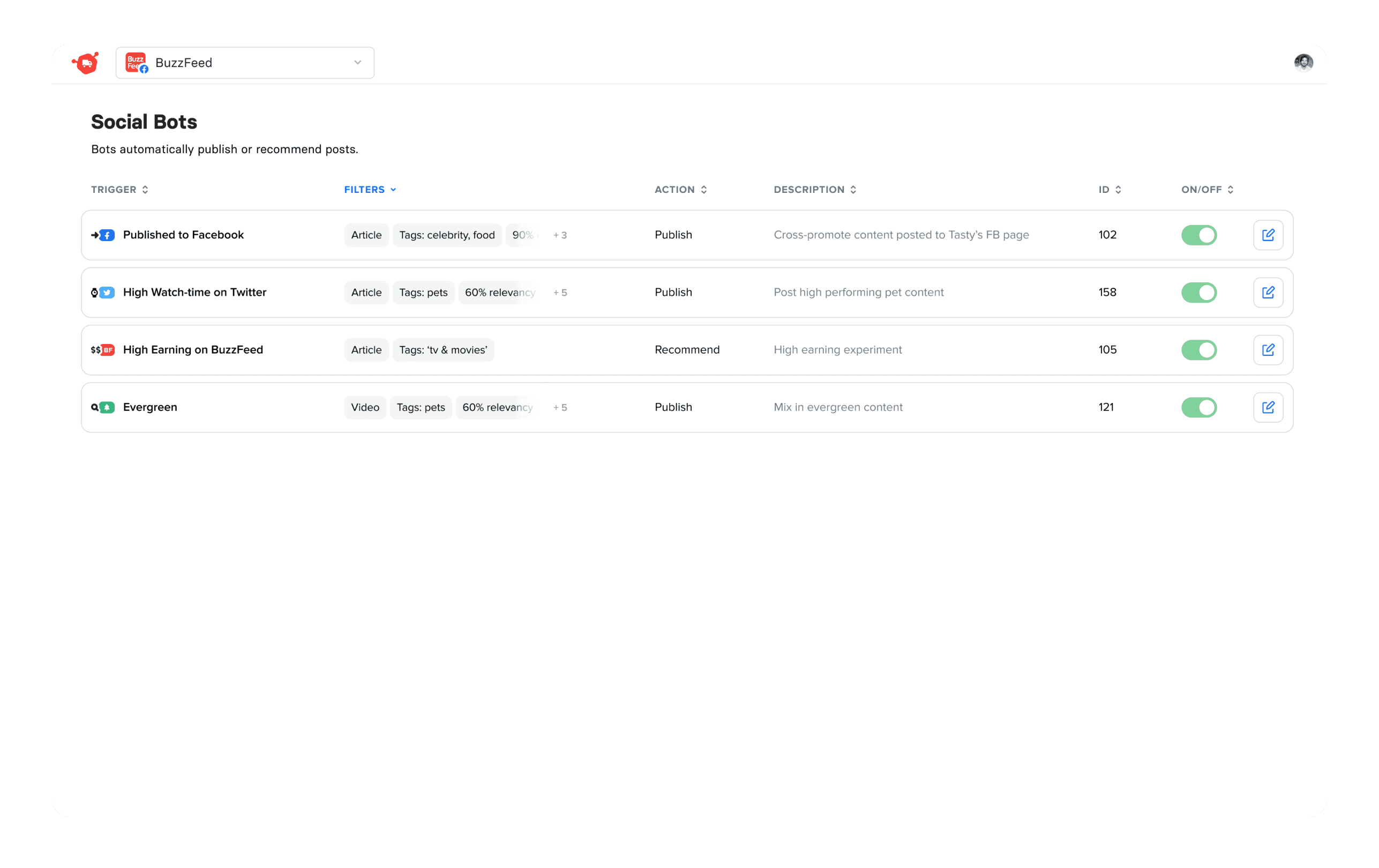
We started from the ground up by thinking about how we could simplify the information architecture of automation. We did some user research and discovered most users used Slack bots and email bots to find content. They were very comfortable with the concept of a bot. We changed the name ‘Automation Route’ to ‘Social Bot’, and came up with a simple people model for how a bot works by breaking it down in to 3 simple parts: a trigger, filters, and an action.
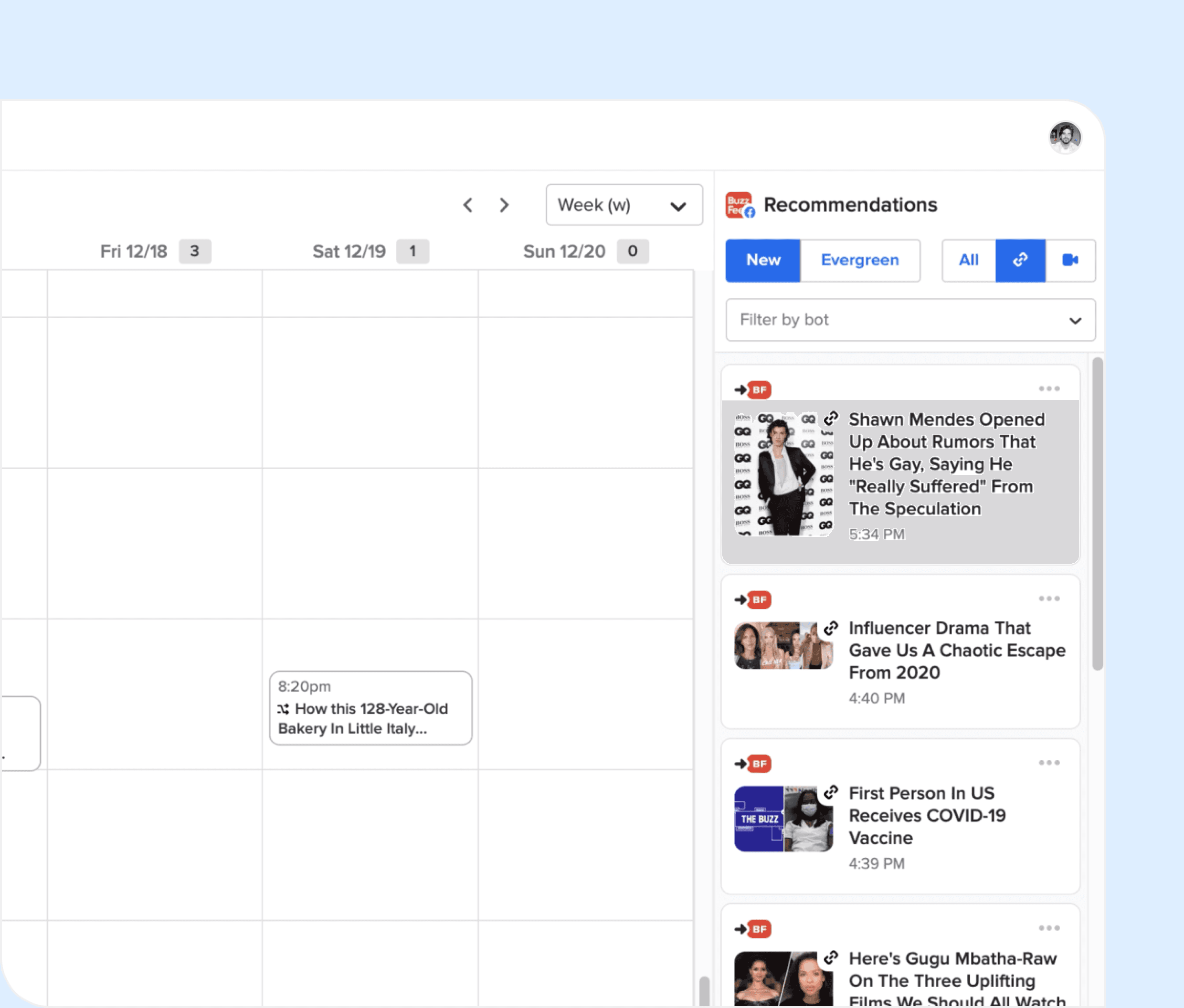
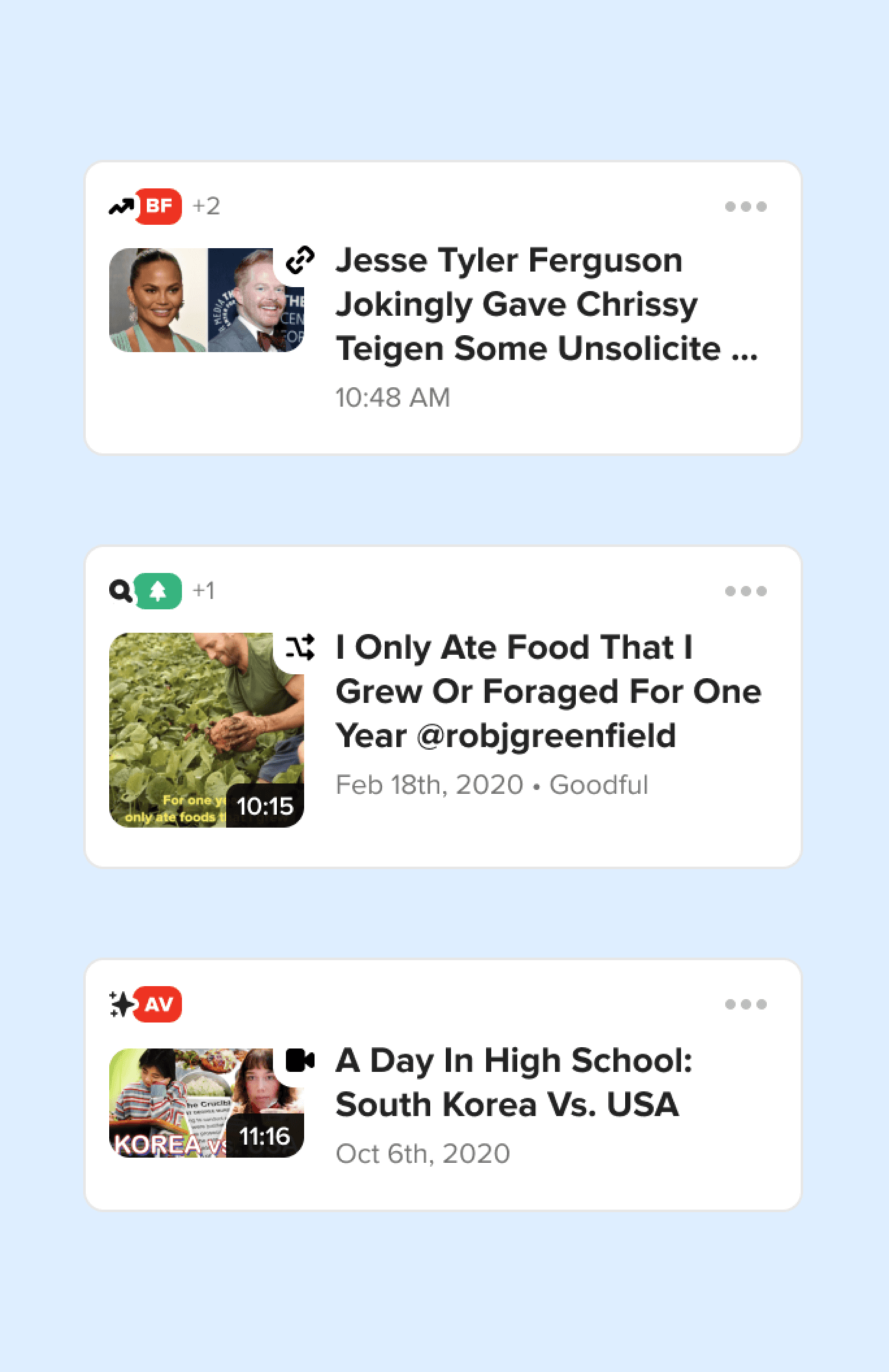
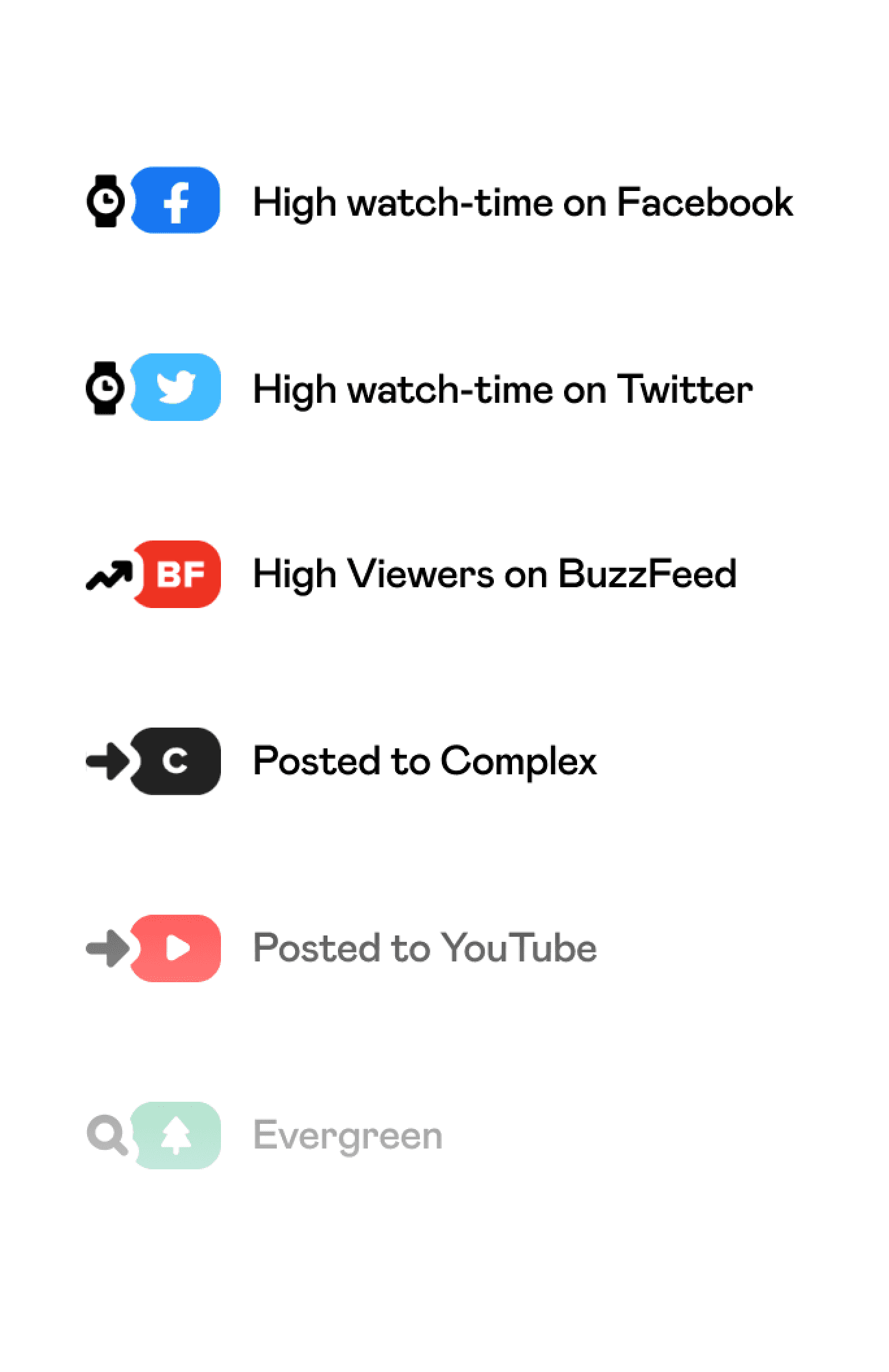
Since we were building for an expert user group, we were able to design more complex icons that could represent both the 'why' and the 'where' of a trigger. This allowed users to scroll through the recommended queue in BuzzFeed's social publishing tool and quickly find what they wanted.
Prior to this users had to sit with our product manager and have them explain each automation. Some pages had up to 30+ automations so this was a time-consuming process done only a few times a year. With this new page, users could easily see each automation and better understand and optimize automation bots on their social accounts.
IMPACT